
Essay by Freeman Turner
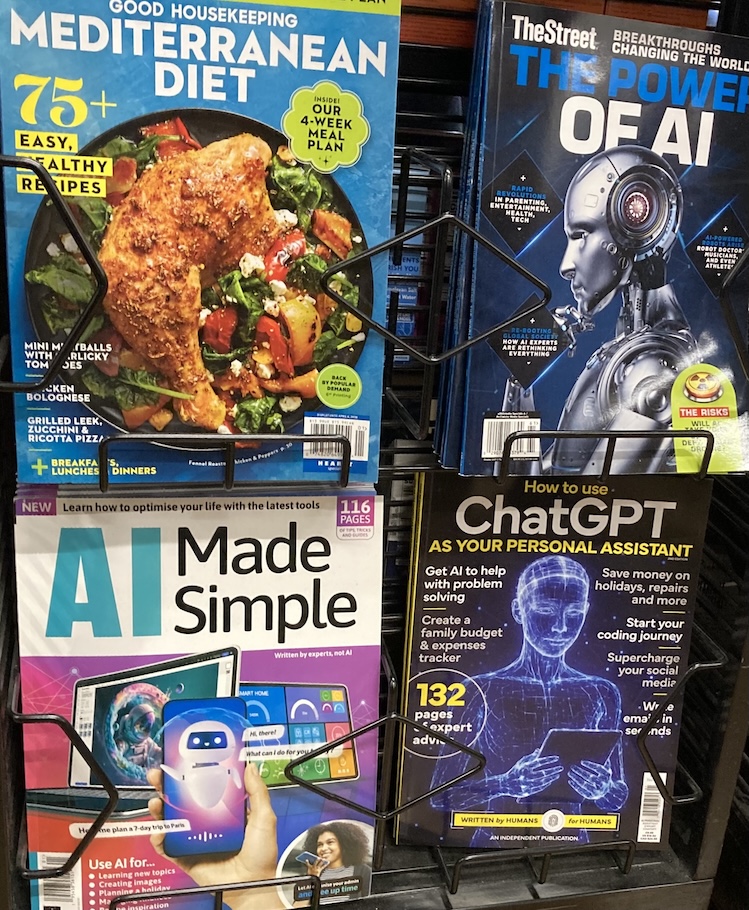
It seems like Nature’s fierce revenge on mankind that all the achievements of technology through which we have taken her mysterious forces into our own hands simultaneously destroy the soul. —Stefan Zweig
By the mid-1960s many young people knew that a crisis was upon us: the culmination of a chronic malaise that could at any moment go critical. From their perspective, the barbarities of recent history, now capped by the threat of imminent nuclear annihilation, revealed modern society as fundamentally pathogenic.
Those who shared this perception had differing understandings of the historical bases of the illness as well as divergent approaches to treating it – from back-to-the-land communes and spiritual sects, to labor organizing and often militant forms of direct action. What they held in common was a determination to confront the crisis wholeheartedly, and with any and all the means at their disposal. To a very large extent their mission, as Patti Smith puts it, “to wrestle the world from fools,” cut across and lines of nation, gender, class and race.
These change-envisioning members of my grandparents’ generation did not, for a variety of reasons, prevail. Ultimately, despite their enormous energy, creativity and capacity for self-sacrifice, they proved unable to convince sufficient numbers of their contemporaries and elders to abandon the status quo and risk exploring alternative modes of social relations.
Toward the end of the past century, with the cold war and an era of wrenching civil conflicts now in the rear-view mirror, an increasingly multinational corporate culture began to shift its energy in the direction of seemingly conflict-free modes of progress: i.e. digital technologies. The cybernetic revolution did not aim at eliminating humanity per se, but rather sought to eradicate certain fundamental aspects of being human, while promising to improve the wellbeing of the species overall. Put another way, cyberculture promoted the algorithm as a general-purpose fix for our messy, associative minds, and envisioned a disembodied, de-spatialized and techno-utopian world order.
In reality, the digitization of everyday life, building upon an existing foundation of media saturation, amounted to a kind of nano-carpet-bombing of both the intellect and the senses, and required seismic shifts in the way people engaged with information, and interacted with one another. This process has now advanced to a point where we have moved well past the “think different” stage to arrive at the threshold of post-thought, in which great swaths of human mental functioning are being hijacked by “intelligent” circuitry. To which the reaction of many otherwise intelligent people is either panic, or a form of technological Stockholm Syndrome.
And to be sure, there is a proto-coercive element here. One can spend much time and energy figuring out how to turn off the software functions that want to – indeed evermore insist upon – acting as overseers in one’s use of applications, and interposing as a third “person” in one’s electronic communications. For example, a textually rich email of several paragraphs from a friend will be auto-summarized: Audrey wants to take you to dinner Saturday at Via Carota. And this comes with suggested responses, which, for the moment, one is free to override. Simply put, when a program asks Can I help you? one glimpses the tip of the iceberg.
Referring to the neo-liberal economic policies that in the late ’70s ushered in the state-of-siege in Uruguay, Eduardo Galeano commented: The people were in prison so the prices could be free. That formulation can easily be updated to describe our current situation: My phone is smart so I can be an imbecile.
Speaking personally, I believe we would do well to allow nature, whether via an asteroid, a virus, or other agencies, to write the final chapter on humanity. My instinct and experience tell me that my brain and body belong to Gaia. How then, could I presume to attempt to recreate my mind in emulation of a multiplicity of inorganic, unfeeling, and ultimately mindless code lines?
Just to be clear, I am not advocating a return to the pre-scientific age. Nor falling back on belief in a divine omnipotent architect of human existence. Inventiveness is as integral to us as any other capacity. But like my elders of the 1960s, I am seeking another way forward. Or as the artist Beauford Delaney put it, the opening up of “the unusual door.”
Finally, I very much doubt that the crisis we face can, as many of us have imagined in the past, be overcome entirely by political force and/or moral suasion. If it can be addressed at all, it will be through a widespread softening of what Baudelaire terms le coeur mortel. This would entail an acknowledgement and coming-to-terms with the terror of death and the rage we feel at our human fallibility. We must find a path that does not require dissociating from our bodies and minds in a quest for an illusory perfection. If we can somehow reckon with the ambivalences, paradoxes, and outright contradictions of human experience, our species may yet have an opportunity to fully embrace the revolutionary idea that for all our limitations, we are replete as beings – sufficient unto ourselves.
To do this does not mean freeing ourselves from fear. It involves learning to be afraid differently.
* * *