
The Dreamer, Interview with Marilyn Kleinberg
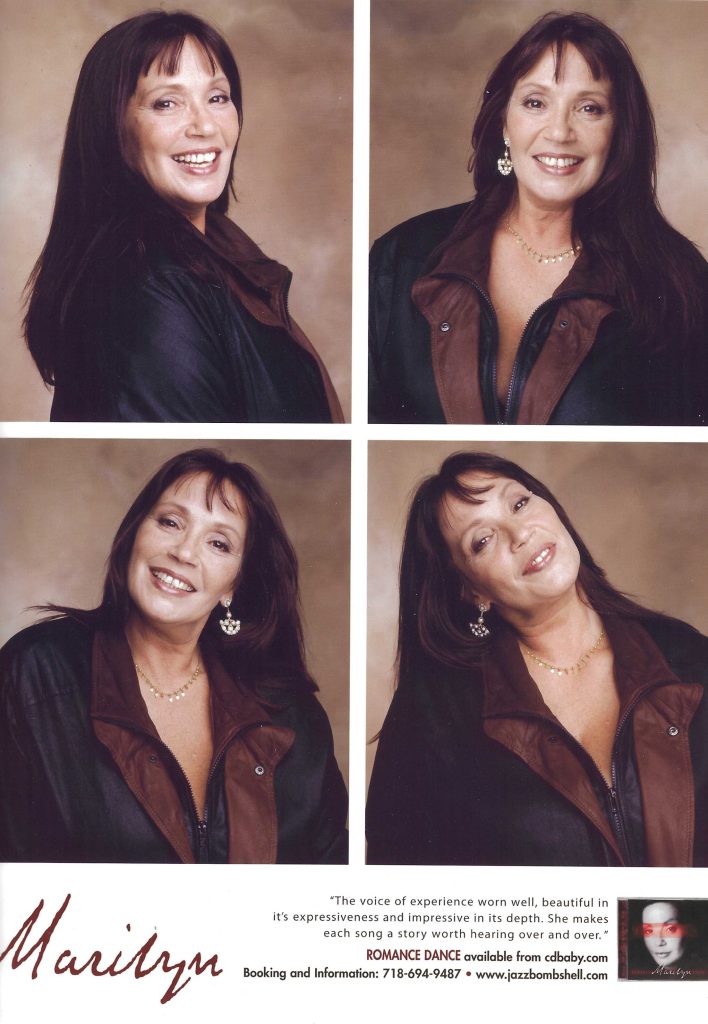
Hello, this is Jan Schmidt. I’m talking with Marilyn Kleinberg on May 29th, 2026. Marilyn is a singer/musician who grew up in New York City and still lives here. Your musician friend Will Galison produced your recent album Let Your Heart Lead the Way. In the 1990s, you released an earlier project called Romance Dance. In the interview with Robert Silverstein in RMR Roots Music Report you said, “That album was more of a personal exploration—an early expression of my love for music. I learned a lot through that process, but Let Your Heart Lead the Way feels like my true arrival as a jazz vocalist.” So how did you come to make this album.
Kleinberg
I had a gig in Brooklyn and this guy I knew for a long time, Will Galison, who’s this amazing harmonica player, came to the gig that night to sit in. Over the years, we sat in on each other’s gigs. We loved singing Stevie Wonders’s “Overjoyed.” He used to come to Arturo’s, where I actually learned to sing jazz standards. I started going there in 1974 and I worked there and sang often up until 9/11. I still sing there.
I was a waitress and a hostess and I was Arturo’s favorite singer. He used to shine a flashlight on me when I was singing. That was my spotlight. They had this big piano in the front. We always had a good time there. When my mentor Harry Whitaker started playing at Arturo’s in the early 90s, he was there almost every night. All the musicians and singers used to come because everybody wanted to sit in with Harry.
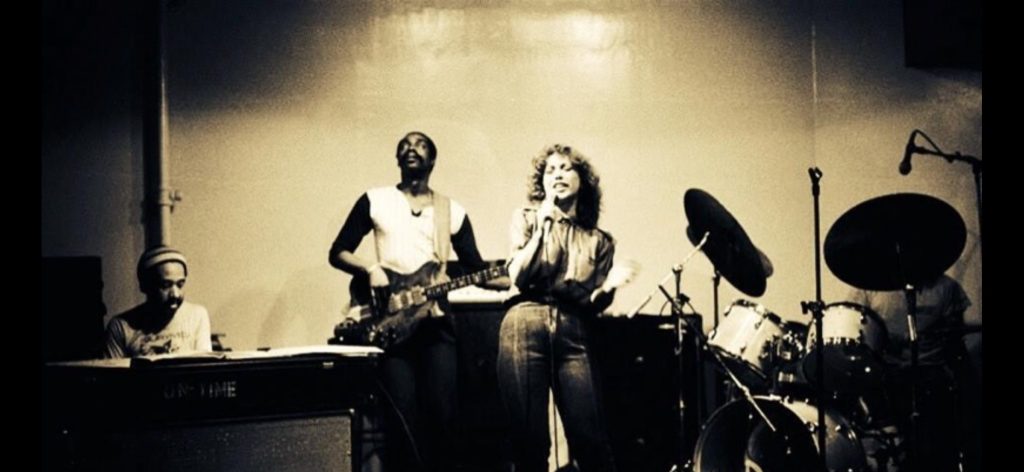
So Will comes to this gig to sit in and he loved the gig. I had this wonderful piano player who plays with me, John DiMartino, and my beautiful bass player, Noriko Ueda from Japan, and Victor Lewis, the drummer. They were my trio whenever I played, as much as possible. But there were a couple of other people, too, that I loved to sing with, some of the guys that played at Arturo’s a lot.
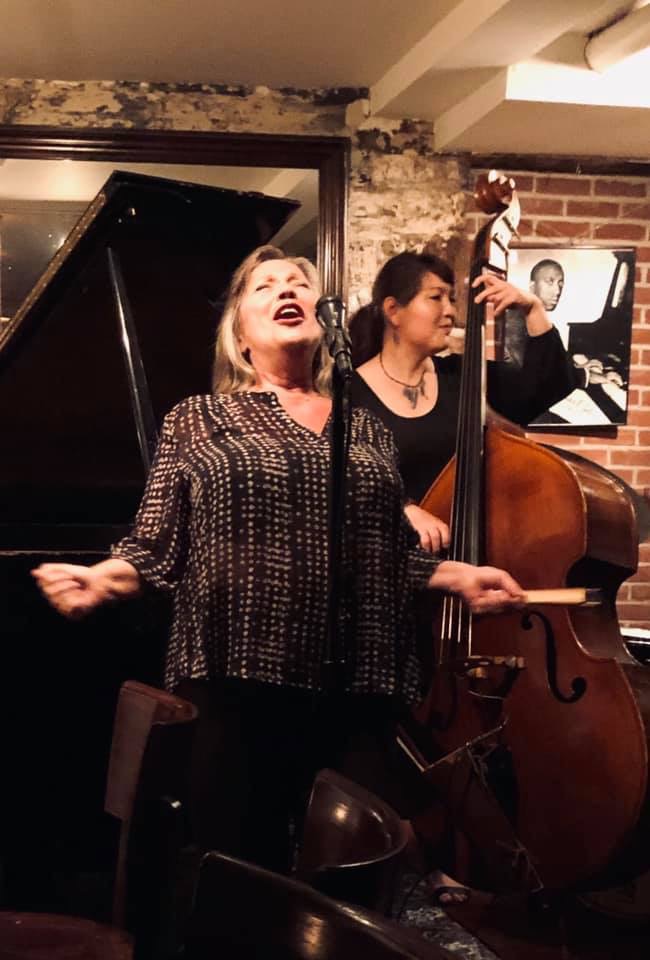
So Will comes to the gig and he flips out over Noriko, because she’s this beautiful female bass player, not an electric bass, contrabass. He’s so excited, he goes up to John and says, “Let’s make an album.”
Then John comes over to me and he said, “Will wants to make an album.” I said, “Great! Let’s make an album.” And they said, “Pick 11 songs.” And I said, “Okay.” I picked all beautiful love songs.
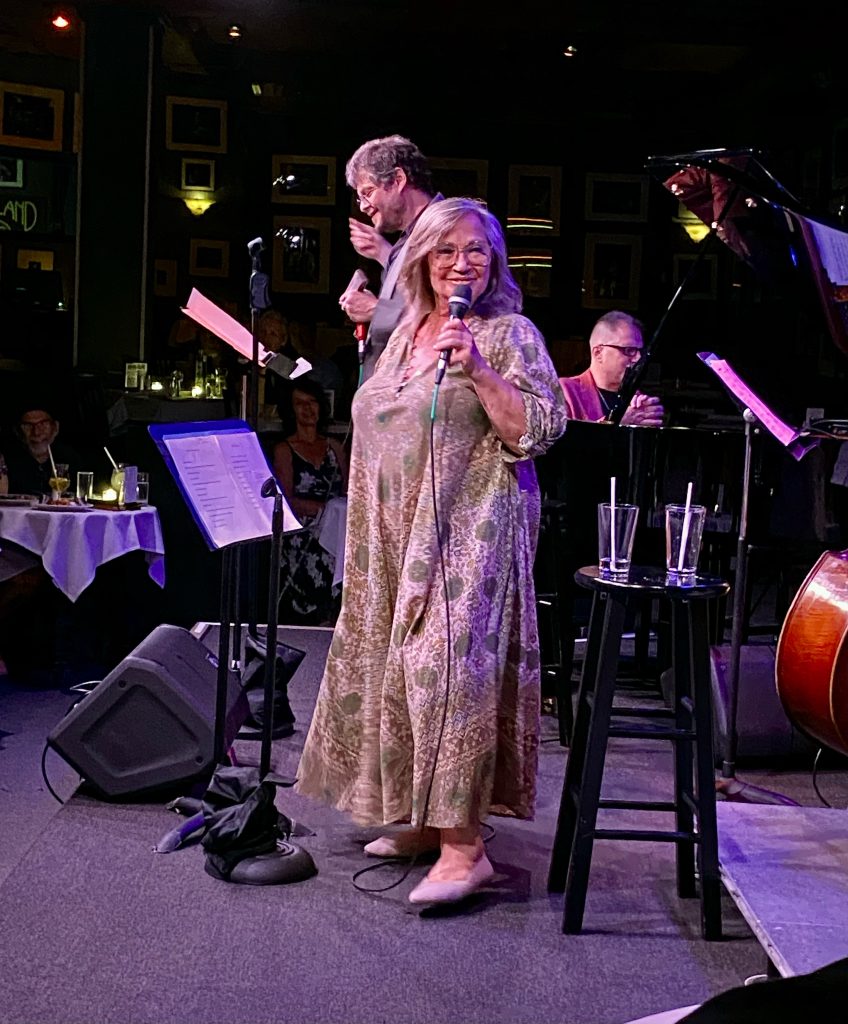
Will was in charge. After the album was done, he got us a gig at the famous Birdland and we sold out the place. I was a nervous wreck. But I go out there and the place is sold out. We had a great time. It was a wonderful experience.
Then Will gets Kate Smith for radio promotion of our album. When he wrote her, he said, “It’s a very special record, but as Marilyn is the only musician less ambitious and self-promoting than I am, it has not been heard by too many people. We had a sold-out release party at Birdland a couple of years ago, but since then, the CD and project has languished.”
So Kate Smith starts sending emails about people and stations who are going to play our album all over these cities and college towns. Even in Italy. I would send them an email saying, “Thank you. So nice.” My friend Leslie Harrison is a deejay on WBGO and she played one of our songs. Delphine Blue of WFUV played some of our recording on her show. Video from Birdland, Marilyn signing Nat King Cole’s “That’s All.”
Schmidt
So lets go back to your early life.
Kleinberg
I just found out recently, in my seventies, that my Hebrew name means Queen. In conversation with my friend from Israel at Arturo’s, I mentioned I had a Hebrew name, Mulka. She said no, it’s pronounced Mal-Kah. She asked me, “Do you know what that means?” I said, “No, I don’t.” She said, “It means Queen.” And I said, “I can go for that.”
Schmidt
Speaking of being Jewish, you grew up in the Bronx. Is that correct?
Kleinberg
Yes. I lived in the Bronx until the first six months of high school. The Bronx was very mixed. Diverse. When we moved to Yonkers, my neighborhood had a lot more blue-eyed blonds, but I went to a vocational high school that was 90% Black kids. It was the late 60’s and I was a little hippy and loved everyone. One day hanging with some friends, a white guy tried to spit on me because I had a lot of Black friends. A wind suddenly came up and it missed me. But I was pissed. I wanted to hurt him. I picked up a branch to bash his head in, but my friends held me back. Five years later I saw him again and he apologized.
Schmidt
So as a kid, what did your mother and father do?
Kleinberg
My mother was a real 1950’s good mother. She made us three meals a day. She ironed everything. She was a real housewife. She was also a very loving person. Even when she rode the bus, strangers would sit next to her and tell her their life stories.
My father became a comedian. I wish I could remember this story about him welding a ship. He needed a job, so this guy said, “You know how to weld?” He did not know how to weld, but he went anyway, and he nearly melted part of the ship, and he almost got arrested for treason. It was a warship. He started to melt part of the ship and they thought he was a spy.
Schmidt
Tell the story about how he became a comedian.
Kleinberg
I thought I was going to be discovered, because he was, and he was in his forties already in the late 1950’s. He was driving a taxi and he picked up Rocky Graziano, who was a big prize fighter. Rocky Graziano’s going to Madison Square Garden to a fight. By the time they got there, he was on the floor in the back of the cab laughing, because my father was very funny and wanted to be a comedian but he didn’t know how he was going to do that. They got to Madison Square Garden, and Rocky Graziano said to him, “You don’t want to be a cab driver. Park this cab and come with me.” So he did. He met Martha Raye, who was a big star in the sixties, comedian, movies, jazz singer, too, and she helped him get started.
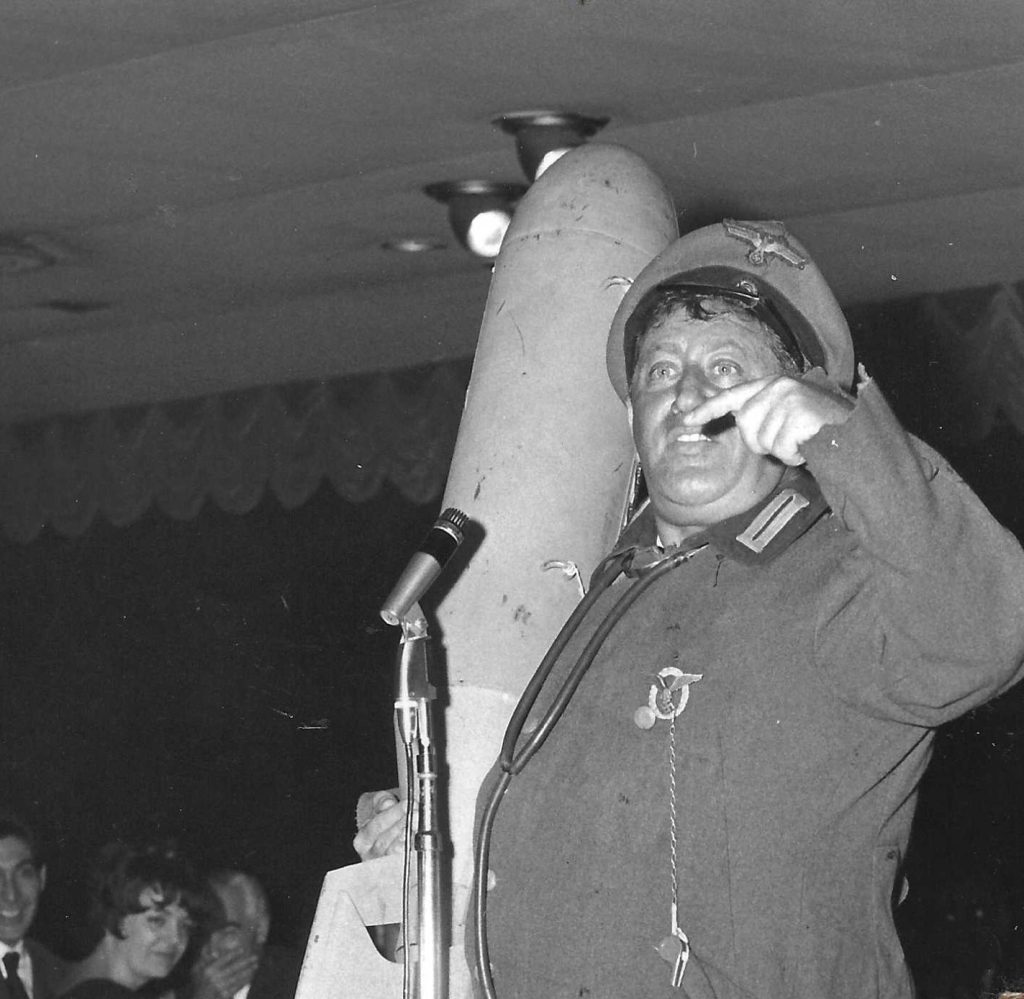
He used to do a lot of characters, and one of his characters was a Nazi German. He wore a ripped coat with crooked medals, like he was blown up, but he would carry this fake torpedo and a blank gun. As he was walking out to do his thing, he would shoot the gun in the air. He got a job at the famous Copacabana. It was a Tuesday night, and there was nobody there except this table of wise guys. He comes out shooting his gun in the air, and they get up from the table and pull their guns out to kill my father, because they don’t know he has blanks in his gun. He got really scared. Then, of course, he made friends with these guys. Later, when my dad opened at the Sahara in Las Vegas for the first time, those very same guys sent him a wreath that you would send to a funeral, saying, “Good luck, Bernie.”
Then there was Freedomland, which was like the Disneyland of the Bronx. When I was a preteen, about 12, 13. 1963, my dad and a few of his friends had two stores in Freedomland. A magic shop and a Western shop that sold these beautiful Indian headdresses and all things Western. Of course, I loved it. I wore this beautiful headdress that went all the way down to the ground, made of feathers. And there was a little adobe hut right outside of the store, so I would put on the headdress and I would sit on the hut and cross my arms and silently be a Queen.
In the Western part, they had stage coach robberies and I was lucky enough to be the hostage. I never had a wait on line for rides at Freedomland, which was very important for my entitlement in life.
Schmidt
When did you start singing?
Kleinberg
I started singing because of my lovely mother. As she cleaned the house, she always had great music on. She loved Tony Bennett and Johnny Mathis and Thelonious Monk. That’s the weirdest part—she loved Thelonious Monk. Anyway, I love Johnny Mathis. I think I learned my first song or at least one of them from his songs.
My brother, Karl, who was five years older than me, could harmonize to anything. He and his friends used to sing doo-wop in the schoolyard. Me and my girlfriends would sneak—because I wasn’t allowed to hang out with him—we’d sneak around to listen to them sing. And I remember saying to my girlfriends, “We should do this, but I’ll be the lead singer, and all of you either sing and dance behind me.”
I was very dramatic. One of the first songs I ever learned was “This Is My Beloved.” You know that song? It’s very dramatic. “Dawn’s promising skies, petals on a pool, drifting.” I still remember this. “Imagine these in one pair of eyes, and this is my beloved.” I was totally into fairytale love. I was going to be Cinderella one day. Prince Charming was coming to get me and whisk me away to a beautiful life
I started singing with my friends. Then I moved to Yonkers and I met new people. One of my best friends, Barbara, and I immediately clicked. She was a good harmonizer, and we used to sing all the time. And Ray. And Eddie Murphy, who played the guitar, and Mary, who sang and played the guitar. All the people that we knew thought we were big snobs because we didn’t talk to anybody. We just were singing and playing music all the time. We were little hippies.
We didn’t have a band yet, but then we met Jay Walker, who was the Jimi Hendrix of Yonkers. He had a band called Fairchild, and he needed some singers. He hired me—Janis Joplin—and my friend Barbara—Gracie Slick—to be the singers in his band, and we were very popular in high school, and we had a lot of fun. We went to the Fillmore every single weekend and heard every single amazing musician.
I went to Woodstock and we were tripping. We were all the way back in the woods because it took hours to get there. There were thousands and thousands of people. We were on our way to the stage, and we went over this little hill from the forest and we see 400,000 people, just hair and colored shirts. We ran back to the woods and we missed all the music. We saw Ten Years After leaving and Joan Baez coming in, or the other way around. After I saw the Woodstock movie, I said, “Oh, I’m so glad we didn’t see them,” because I think everybody was smashed and the music wasn’t that great, of course, except for Jimi Hendrix’s “Star-Spangled Banner.” But I got to see all of them in the Filmore close up. I remember sitting in the second row to hear Neil Young solo, just him and his guitar. I yelled, “This is heaven!” He heard me and said, “We need a lot more of that around here.”
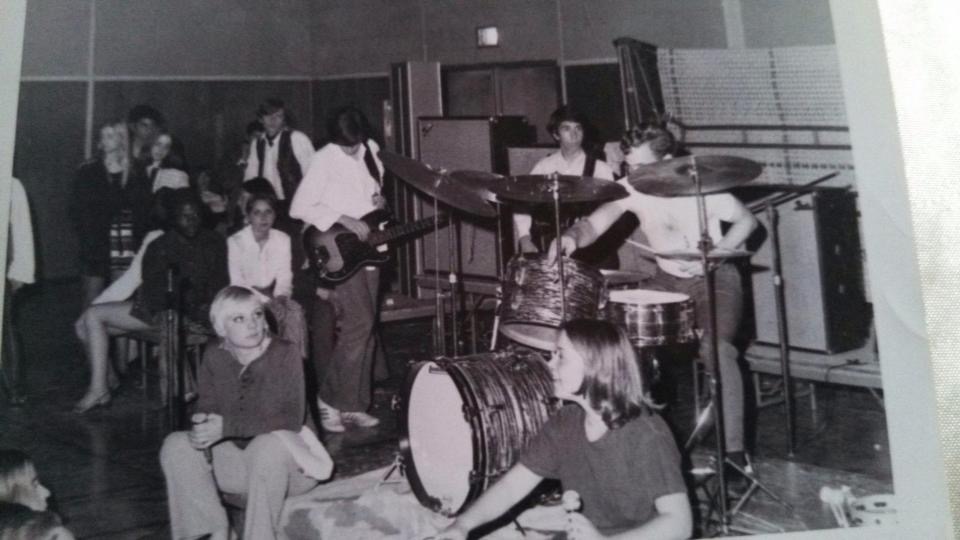
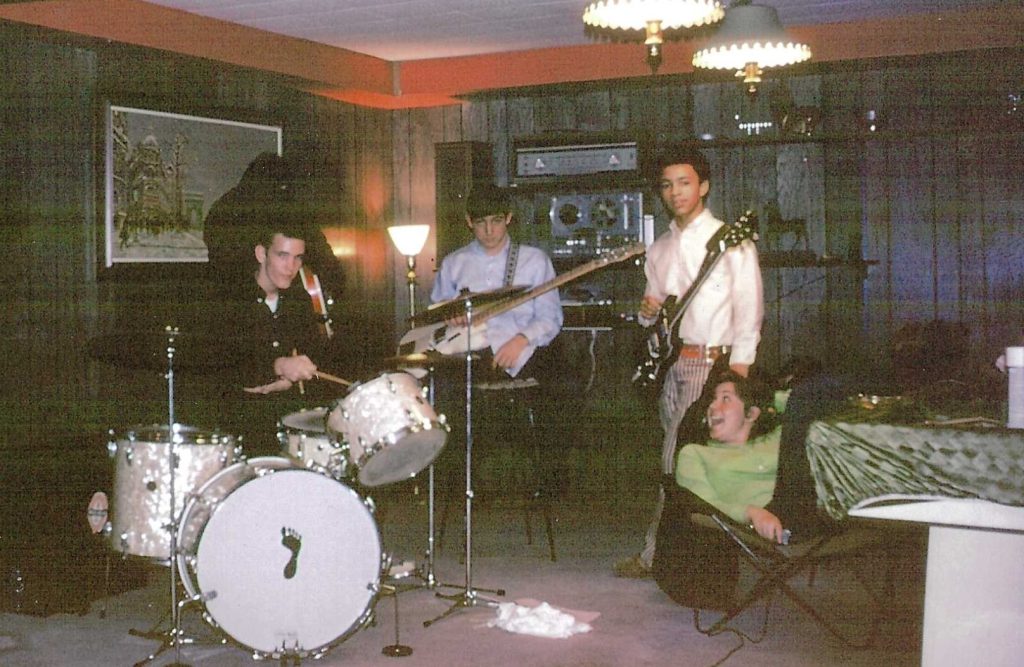
Barbara Scully, Marilyn Kleinberg, Bobby Rescigno on Bass, Jay Walker, Vincent Laporta,
Ray Erliss on drums at Gorton High School
Schmidt
Tell the story about the girls asking you to join their gang.
Kleinberg
That was in the Bronx, in junior high school. I always had a big mouth and I could be scary. I would stand up for other girls that were getting in trouble and act like I was really tough. The girls from Fordham Road were really tough. I was a little hippie, forever, and I never hit anybody, but I did have a big mouth and I could be scary, thanks to my father, who was very scary, I learned how to be scary from him. The girls had their hair teased up high in the sixties and they would actually have razor blades in their hair when they got into gang fights. One of the girls asked me if I wanted to join their gang. I started laughing. I said, “Are you kidding me? I never hit anybody in my whole life.” She said, “Get outta here! You got to be kidding me. We thought you were so tough.” I said, “No.”
Then when we moved to Yonkers, I missed a half-term of high school because my parents didn’t know where I was going to go to school and I wasn’t interested in going. But my older brother had become a hairdresser and he was doing very well. He worked for Mr. Kenneth, who was Jacqueline Kennedy’s hairstylist. My brother was Nancy Sinatra’s hairstylist for while. He did all the hair magazines. I loved makeup, so I said, “Maybe if I take a cosmetology course in the vocational high school, I’ll be successful like my brother.”.
Schmidt
When did you start having a band?
Kleinberg
We used to hang in a park and I’d carry around a portable record player with a bunch of albums. We started doing high school gigs. We did this one great gig in the beautiful Untermyer Park. Then we broke up. After I graduated high school, I didn’t want to go to college. I was so glad to get out of high school. They let me fix that six months of history that I missed my first year, and let me out after summer school.
The racism thing began before high school, because my first boyfriend was Puerto Rican, who saved me from being attacked by boys. When I was young, I’d get attacked every day by some goofball, because they didn’t know what to do with women with boobs already. And I was walking across the schoolyard in junior high school, and I hear this guy say, “Get your hands off her!” And I was like, “There he is, my prince!” And he was. He was a great guy, and he was Puerto Rican. Everybody loved this guy. But when we started dating, the guidance counselor actually called me into his office and told me I had to break up with him. And I was like, “What? You love him. Everybody loves him. What are you talking about?” It wasn’t allowed. So that started my understanding about racism. I was like, “What? What’s wrong with these people? What’s wrong with this world?”
After high school, I didn’t know what to do. I planned to become a superstar and have an orphanage to save all the children in the world. I was looking through the newspaper. “What am I going to do? I guess I’ve got to get a job now.” I was 18 or 19 and I was still living with my parents and that was icky. I looked through the paper and saw this ad for childcare in the New York Foundling Home. They had a year-long course where you lived there and you took care of kids, preemies to seven-year-olds. I saw a one-pound baby; we saw a birth. Then we took care of the kids. We had six babies we had to diaper and feed in the morning. Then we went up to the toddlers. Then we went up to kids up to seven years old. At that time, they took mostly kids that were abused.
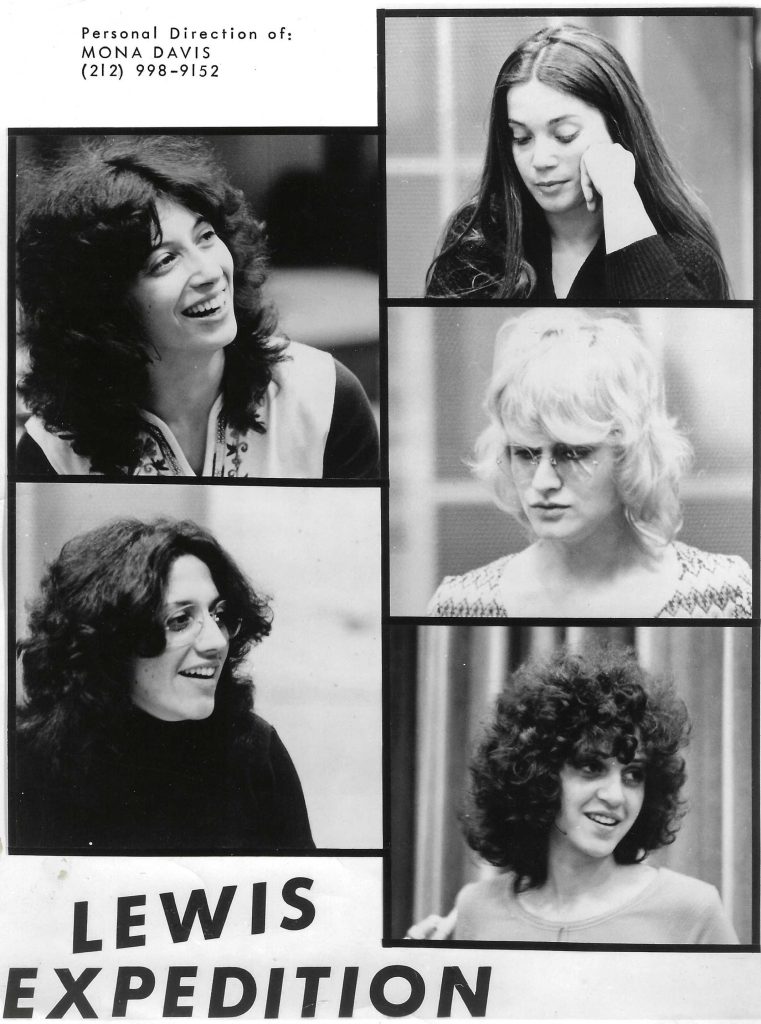
New York Foundling Hospital was on 68th and Lexington at the time. That was a good experience. I learned how to take care of the kids from my orphanage. Then I graduated from there and I was going to be a childcare worker. The next week or two after I graduated, I was with my friend Ray, who is the most darling person in the world, and we went to somebody’s wedding. There I met Grace, who was a female drummer in an all-girl rock band and they just happened to need a singer. I auditioned; they hired me and that’s when I started to go around the tri-state area. We mostly played in bars and did one female roller derby. The group was named after the leader, The Lewis Expedition. She played organ. It was rock music, although I did learn how to play the bass on one song, for Marvin Gaye’s “What’s Going On.” It was like two notes on the bass. It was so exciting to do that. That was fun for a while, except I was really green. I didn’t know what I was doing, so they were always on my case about how I should sing and what I should do.
This was in the early 70s and I was 20. Grace, the drummer, just loved to hug me, and I was always a hugger. I was like, “Oh, I finally met somebody who loves to hug as much as I do!” Then this other girl came and sang, and she told me they were lesbians. I said, “Oh, interesting. I had no idea.” It was no big deal; I just wasn’t aware and at the time, people weren’t out. I lived in my own world, I guess. I pretty much still do. I hung out with the girls, and the girls rocked.
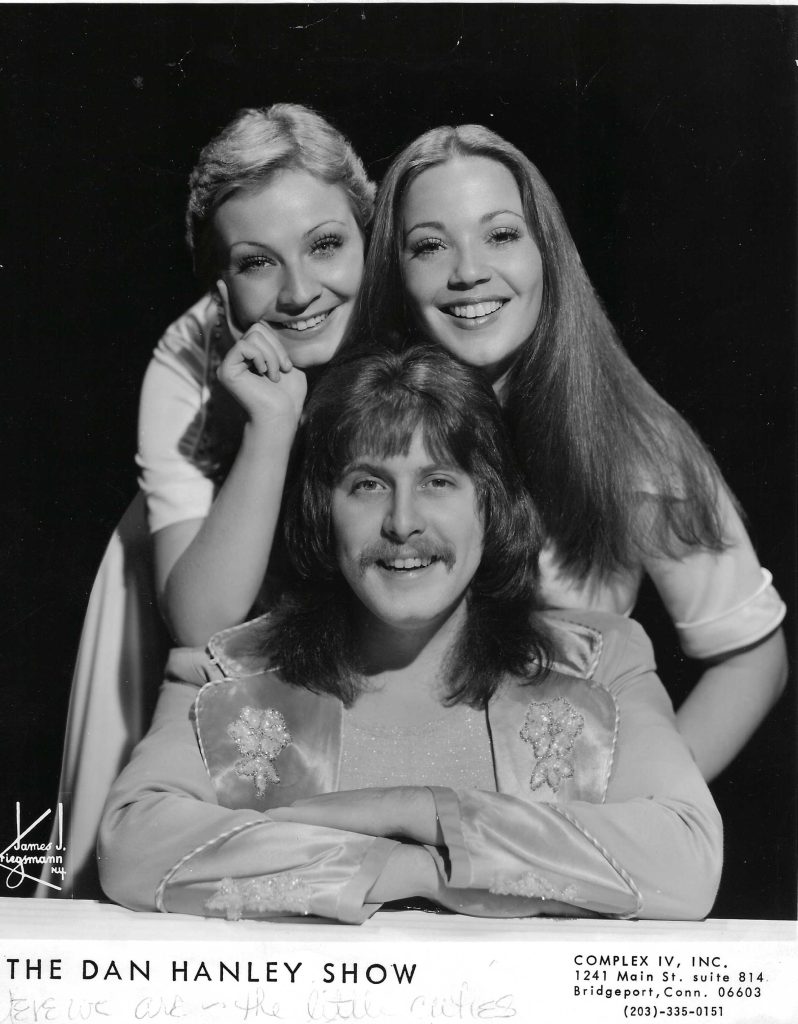
That lasted a couple of years. Meanwhile, my dad, who had teamed up with Steve Rossi, who used to be with Allen and Rossi. Rossi wasn’t with Marty Allen anymore, so he teamed up with Bernie Allen, and they were doing comedy together for a couple of years. They brought us to Puerto Rico to open for them, the all-girl rock band. There I met young Dan Hanley, who was the best white soul singer I ever heard. He was great. He was from Indianapolis, and he had a wife. He was in this band called Salt and Pepper, so it was him and a Black guy. They did this amazing thing. He would have half a Black face and the Black guy would have half a White face, and they sang their asses off. They were really great. But they were breaking up.
Danny wanted to start a funk band in L.A. and he needed two backup singers. My friend Barbara, who I sang with in our first band, was in college. I said, “Danny wants to start this band in California. He needs two backup singers. You’ve got to come. We’ve got to do this, Barb.” And she quit college. Her father was a fire chief. He was not happy. But my father talked to her father. “How could you not let these girls go out and do their thing?” So we drove to L.A. in my little blue Volkswagen and we got in this 10-piece funk band, Hammond organ, full horns. It was great. The Dan Hanley Band. And we traveled from L.A. back across the country, singing and having fun in our little caravan. Our first gig was the opening of the Playboy Club in Century City. Then we hit the road.
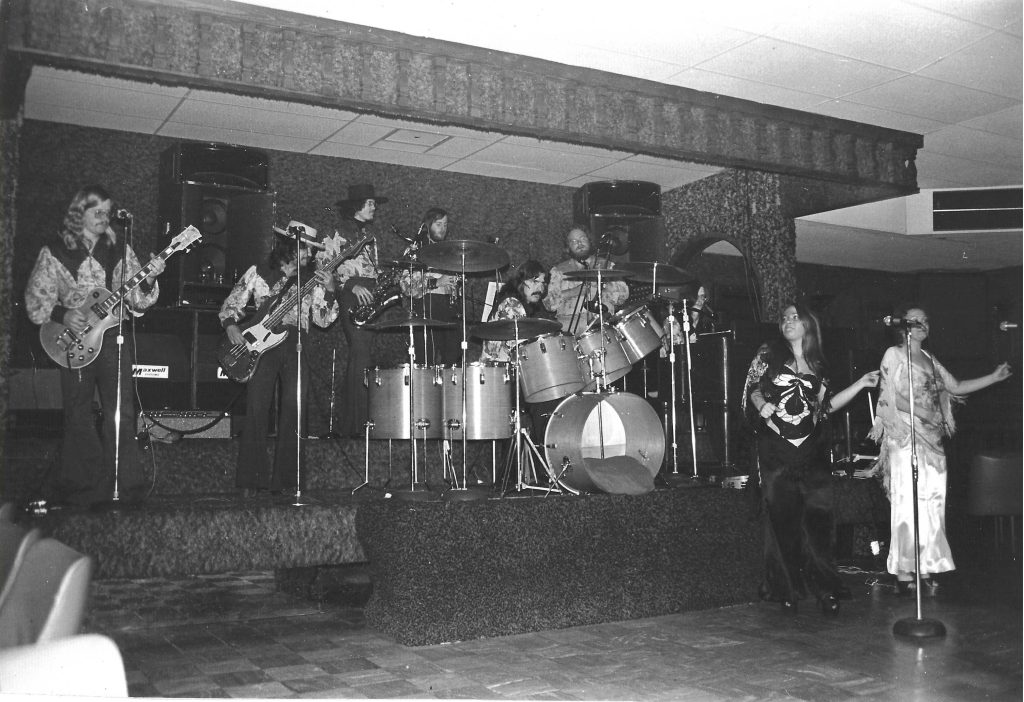
In the 10-piece funk band, we were doing all kinds of things. We did a couple of Frank Zappa’s tunes. My first solo in that band was a Donny Hathaway song, called “Love, Love, Love.” Such a beautiful song. We had a great time. We were young. We were doing gigs across to the East Coast. We played in Texas, Florida, Kansas City, New Orleans. Yeah, we had a great time. And the horn players turned me on to jazz. So I went from rock to soul to jazz singing.
We had a great band, and we got to the East Coast, in Connecticut, and we broke up. I wound up being a bartender at the last club we played in, the Mark III Lounge in Bridgeport, Connecticut in 1974. I decided that I wanted to sing, so I did get a couple of gigs, but I didn’t like taking care of the business. I was good being in a band if somebody else took care of the business. I did not want any part of it. This followed me throughout the rest of my life. Then I quit singing for a while all together.
By 1977 I was back in New York and working at Seventh Avenue South. I hung out in the jazz clubs all over the West Village and had a great time. I didn’t make a lot of money, but I got to sing with some of the greatest musicians. They used to play at Seventh Avenue South. Chaka Khan used to come there. She gave me a singing lesson one day. She said, “You know, just make believe you’re an archer. You got your bow, pull the string back, let it go!” That’s what I should do with my voice. I said, “Easy for you to say.”
I met all these great musicians, and Kate, partner in Seventh Avenue South, was always saying, “Come on! You sing so good. Just go sing with them. Go sit in.” So I used to sit in with these guys at the club that was great. And I got a couple of gigs here and there. Then I met Harry Whitaker.in 1980, when I came back from California. Harry’s a piano player. Alex’s daddy was the bass player, and he played with a lot of people.
One night at Seventh Avenue South, Harry came up to me and put his face right in my face. He said, “You are so fine, but I gotta go.” And he ran out the door. Then we just started to bump into each other all over the city. I’d come out of the train station and he’d be standing on the corner. We became great friends. But he did tell me that I had to sing. He said, “You have to sing, Marilyn. You’re an artist. You can swing.”
And I was like, “What do you mean I’m an artist? I’m not an artist. I’m just a girl who likes to sing.” I never thought of myself like that. He started to help me. I would go to his house and I’d learn some songs, and I would sing with him when he was doing some gigs in the clubs around the Village and I got to play with these great musicians that are all gone to heaven. Harry’s gone. Kenny Kirkland was an unbelievable piano player. He played with everybody. I never saw so many musicians crying at his funeral, this Kenny Kirkland. He was a brilliant guy and sweet as sugar. I was doing gigs with Alex and Harry and my friend Victor Lewis, who was a drummer. I was kind of singing funky stuff, singing a little Stevie Wonder stuff and I was singing standards. It was fun.
So there I was in the music world. And I met Alex Blake in the clubs. He was a great bass player. He was very handsome and we got together once in a while, and then we got closer together. Then we fell in love. We were living in a one-room with a bathroom in the hallway that I’d been living in on 86th and Riverside Drive. This taught us we were compatible. Then a musician we know had a brownstone in Brooklyn, in Clinton Hill. This is 1986 and we moved there. Alex was born and raised in Brooklyn. Alex Hendrix Blake. Alex was a very happy baby. And now that little baby plays drums in Disneyland, and he’s getting married next March to the princess that he met in Disneyland. So the drummer boy and the fairy tale story princess——have come together. My fairy tale has come through my son.
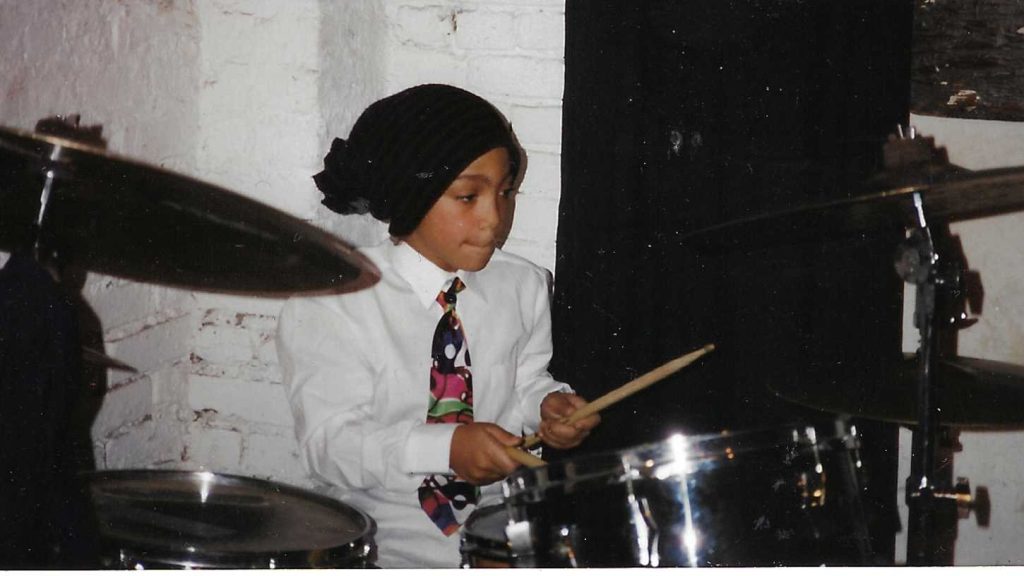
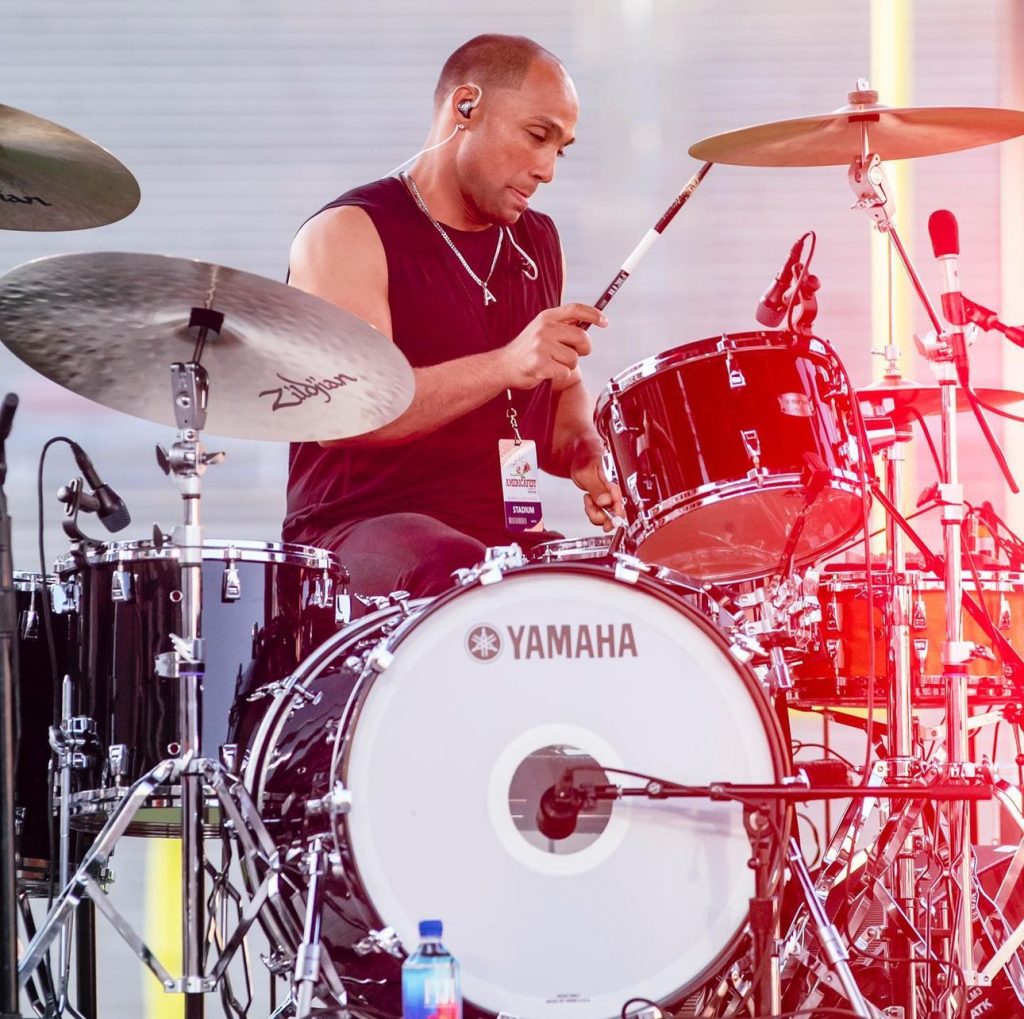
Alex Hendrix Blake
Schmidt
So these last few years, you have a group that you play with and you play at clubs downtown. I’ve heard you sing at any number of people’s memorials, but at one point, we were around our mutual friend Beth Young, who was in the process of dying, and you started us singing.
Kleinberg
“My Girl.” That was Joe’s idea, Hollywood Joe, for us all to sing to Beth. At Beth’s memorial, Philip Solomon played the guitar and we sang “Blackbird” because Beth loved that song.
Schmidt
Are you singing these days?
Kleinberg
Not much. I still sing at Arturo’s once in a while. I don’t think about things in the real world much, except my job. The job that I have now is the realest, closest I’ve ever been to reality in my life.
Schmidt
You work for a small magazine.
Kleinberg
Yes. I’ve been there for 20 years, because I never wanted to work a regular job. I tend to be a little delusional, had dreams of being a superstar with an orphanage. I did practice for the orphanage at the New York Foundling Hospital.
Schmidt
So to some degree, you are a success.
Kleinberg
Yes. Put me on the stage, give me a microphone, I’m great. But before that? I’m a nervous wreck even before a little tiny gig. I didn’t grow up that way. I grew up in a fantasy world. I am the Queen.
* * *