
A colloquy on Teresa of Ávila and her influence on literary women, with writers Diane Alters and Ann Dávila Cardinal
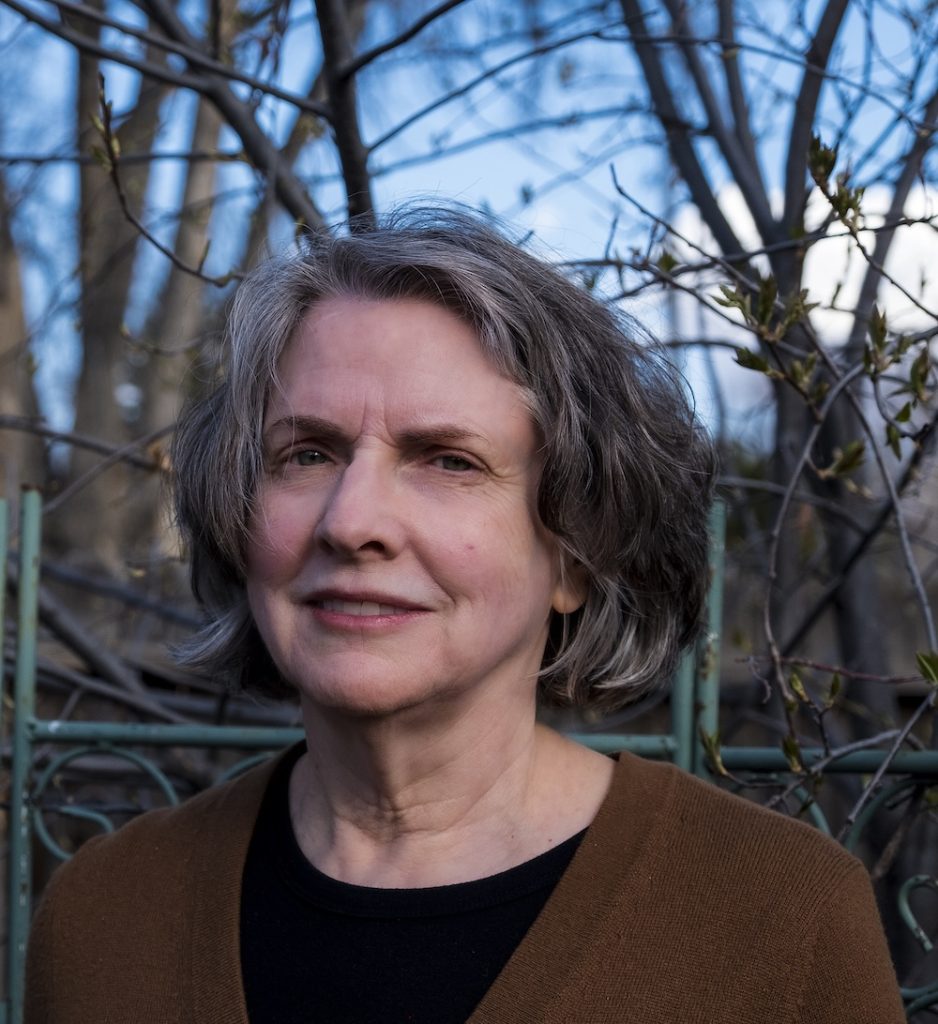
(photo by Stacey J. Platt)
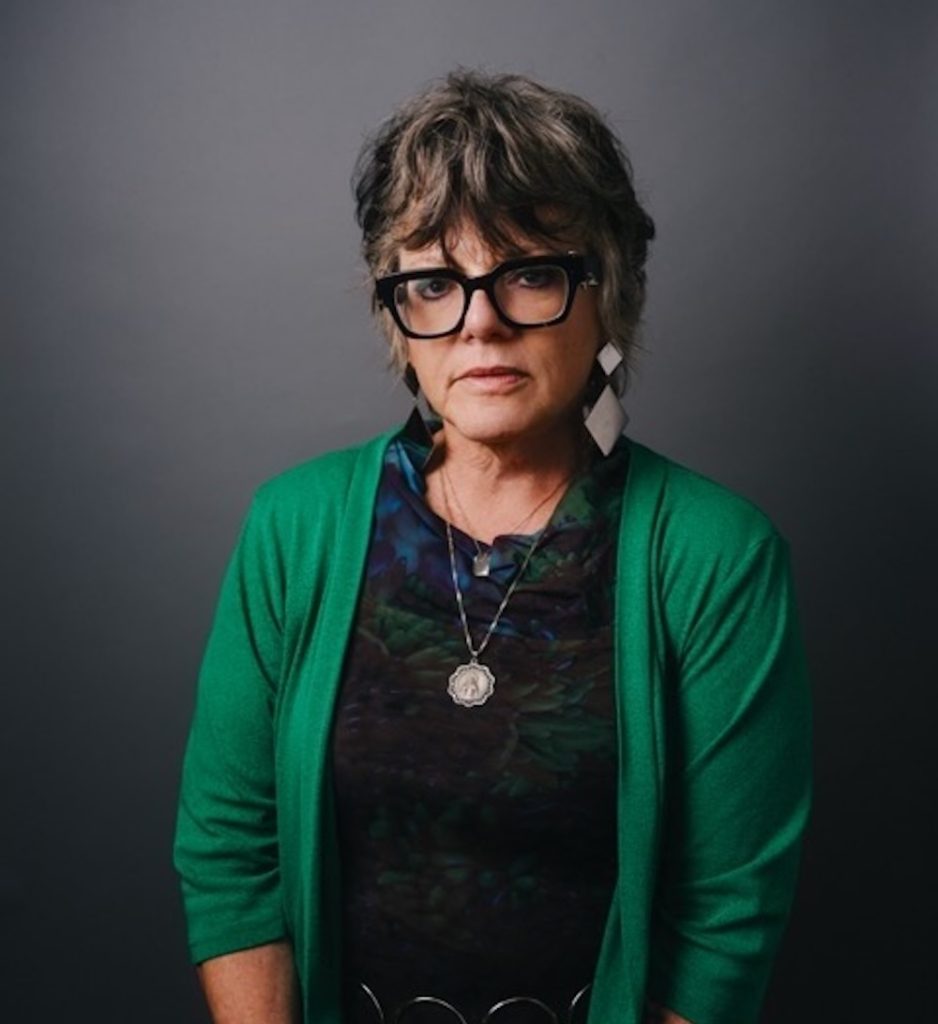
Cardinal
Teresa of Ávila (1515-1582) was a force…
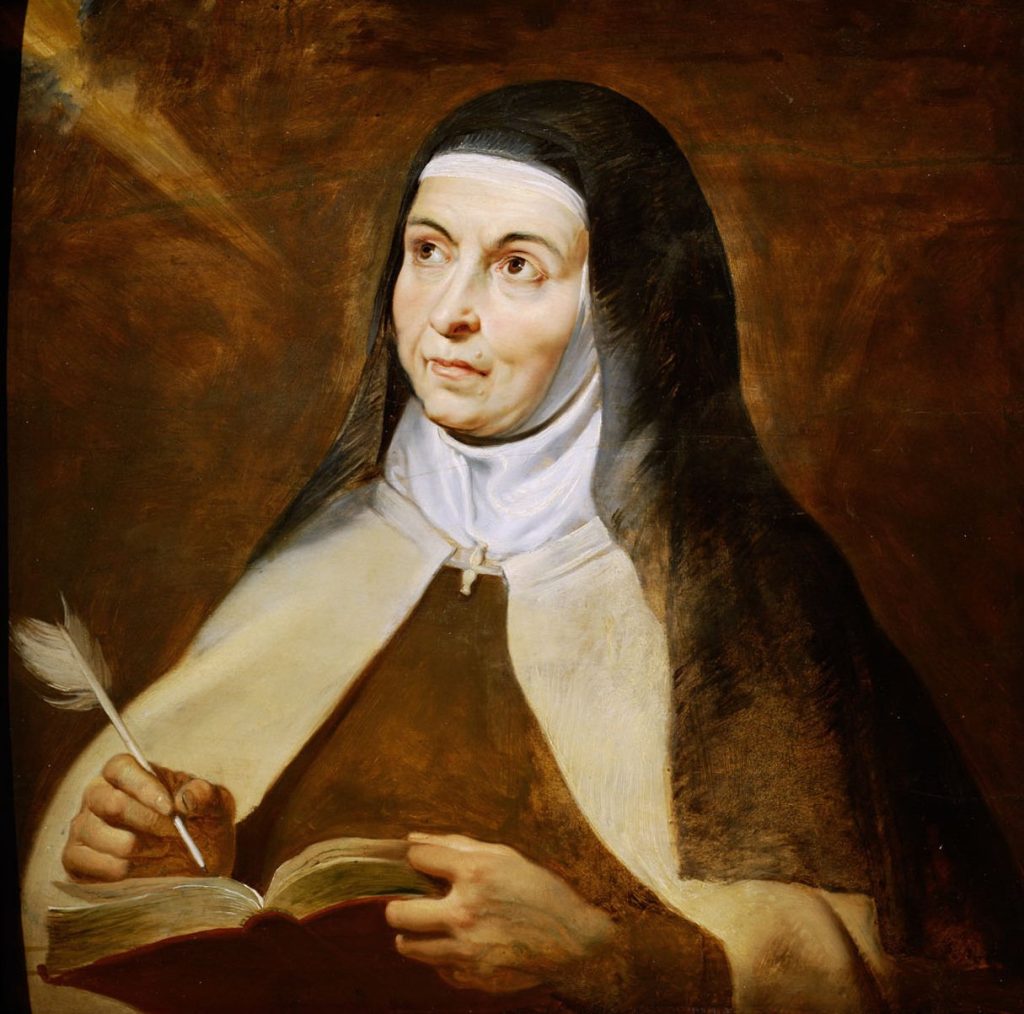
Canonized by the Roman Catholic Church in 1622, Teresa wrote prolifically across multiple genres—a woman and public intellectual in Golden Age Spain, one of history’s most patriarchal societies. Memoirist, philosopher, theologian, poet, mystic, reformer of the Carmelite religious order, and mentor of a younger male saint, John of the Cross, Teresa spent her life battling illness and dodging the Spanish Inquisition, which mistrusted her writings, her visions, her Jewish paternal heritage, and above all her gender. She prevailed—a courageous saint in nun’s habit, her symbols, the pen and the book.
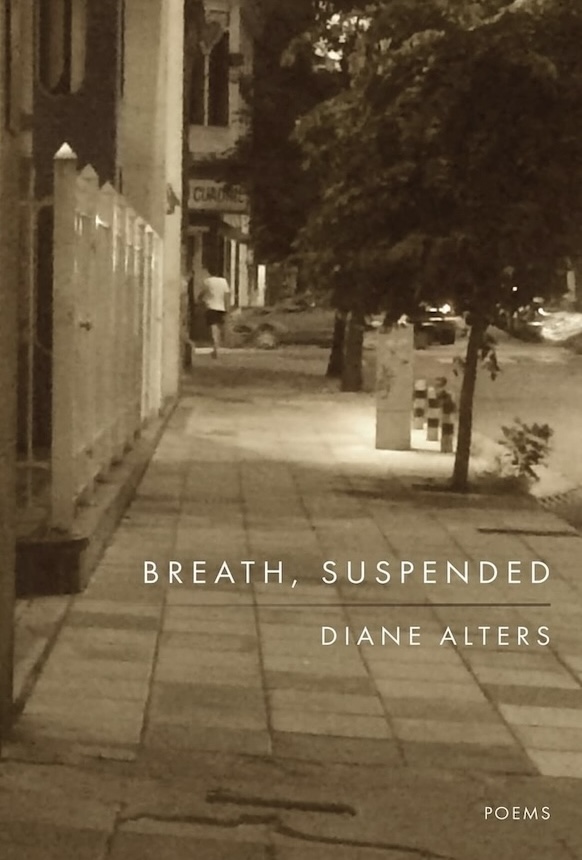
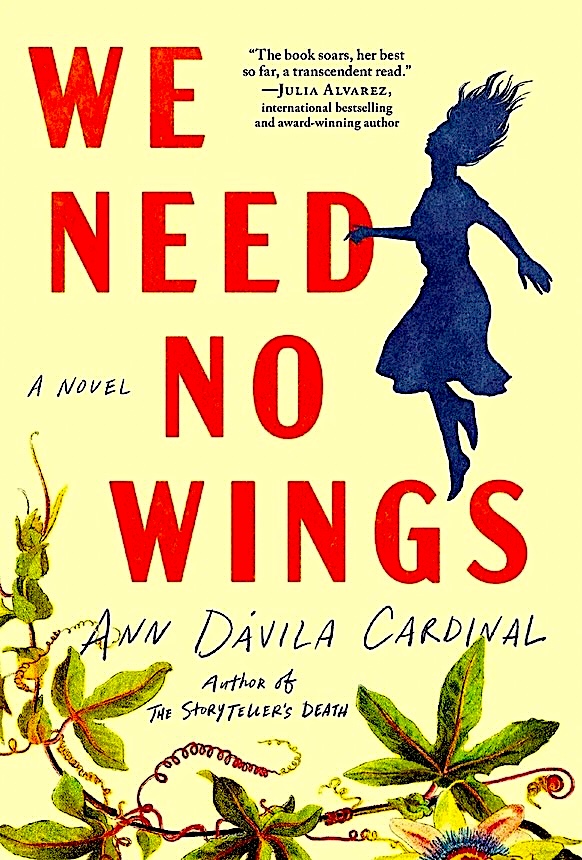
From Teresa’s day onward, women who write have felt her influence, with many, like the French essayist Julia Kristeva, expressing a deep, daughterly love for her muse. Two contemporary writers who channel Teresa are poet and journalist Diane Alters and novelist Ann Dávila Cardinal. Alters, author of the acclaimed poetry collection, Breath, Suspended, has strong family and academic connections to Latin America and Spain, where she came to admire Teresa and her poetry. Dávila Cardinal—who traces her family’s roots from New Jersey through Puerto Rico to Ávila—is the author of eight books. These books include We Need No Wings, a work inspired by Teresa’s mystical experiences of levitation and their role in a modern woman’s journey of self-discovery. A poem by Alters and a book excerpt by Dávila Cardinal are part of this colloquy.
Cable Street’s Dana Delibovi—another writer whose work has been inspired by Teresa—sat down via Zoom with Alters and Dávila Cardinal to chat about the saint, a woman who has exerted her literary influence for almost 500 years. What came across in the conversation is that Teresa’s influence gathers its power from her fearless perseverance—her determination to write in the face of institutions aligned to silence her.
DANA DELIBOVI
Tell me about what your personal connections to Teresa of Ávila. When did you first learn about her, and what have been your reactions to her?
DIANE ALTERS
My first real connection with Teresa of Ávila was reading her poetry in Spanish. I was in in Soria, Spain, a city in Castilla y León, the region of Spain that also contains Ávila. I had enrolled as an auditor in a program offered by my college in Soria, where I took intensive Spanish courses. In an advanced class, we read some of her poetry, and I was really taken with the passion she articulated. Many of the poems felt current. I didn’t get the sense that I was reading someone from a bygone era. She wrote in a Spanish that felt very immediate. Another book, Teresa’s collected letters, also amazed me. She was prolific, writing multiple letters a day to her political allies, her family, her colleagues and the prioresses and nuns in the convents she founded. Her letters are like her poems in many ways. They’re in the vernacular and, depending on who she was writing to, they could be quite familiar. I just became captivated by who she was, and very interested in her strong personality—she struck me as contemporary, not only as someone from centuries ago.
ANN DÁVILA CARDINAL
Yeah, she’s definitely a badass.
For me, my whole childhood, I was told that our family in Puerto Rico descended from a sibling of Santa Teresa de Ávila. I just dismissed it as a Catholic fantasy. But a little while after my mother was gone, I started to think about it. I read Interior Castle during college, in Spanish. I thought it was beautiful, although I was a little triggered by the subservience she had to show to avoid trouble.
But years later, inspiration came from Teresa the mystic. I was pacing back and forth in my office, thinking I was never going to have another idea. But this line came to me, a kind of riff on Teresa’s mystical experience, described in her memoir, The Life: “The first time I levitated, I was in the garden.” That was the start of my book, We Need No Wings.
DELIBOVI
I would like to know more about your literary connections to Teresa. What are the ways that either her subject matter or her writing style has had an impact on what you do?
DÁVILA CARDINAL
That’s a hard one. I think for me, Teresa’s style—and my historical understanding of why she had that style in 16th-century Spain—fed a lot of my anti-colonialist anger. It also fed my anger about the lack of women’s rights then, and the way Teresa was treated.
Teresa is really a very flowery writer. I am not. But she inspires me because I’m gonna speak my truths—which is what she did.
ALTERS
My own sense of her style, as I mentioned, is that there is something contemporary going on there, something direct and part of the vernacular. But writing style is not the main thing. What really impresses me about Teresa is her perseverance as a writer, and in all areas of her life for that matter. Her work as a writer and as founder of convents was always scrutinized. The Spanish Inquisition checked up on her all the time, reading everything. But despite this, she kept writing. Constantly. There is a big lesson for women writers there. It’s to keep going, to persevere.
DELIBOVI
Let me follow up on some things you’ve said. Anne alluded to colonialism and the sexist society of Siglo de Oro Spain, and Diane mentioned the modern quality she hears in Teresa. Colonialism first. I have been reading the novel, Las niñas del naranjel by Gabriela Cabezón Cámara, a work of historical fiction influenced by women’s religious life and colonialism in the 16th to 17th centuries. This book has really gotten me wondering about the effect of colonialism and women’s roles on artists and intellectuals of the period, like Teresa. What are your thoughts on this?
ALTERS
Spain fascinates me, as does its brutal history in Latin America. I’ve spent significant time in both Spain and in Argentina, and I have always appreciated the openness of the people I’ve met. They are willing to talk about the difficult legacies of rebuilding their countries after dictatorships, for example, after Franco in Spain and after the junta’s Dirty War in Argentina.
These are always issues of power—power of the authorities versus the power of the people. In Teresa’s case, I think the men that were after her, were after her power. They were trying to confine her, because they were threatened by her—by her power as a thinker, her convent building, and all the rest. I don’t know if I can pick up the thread to make all the connections, but I will say that Teresa’s way was to confront established power. Something very interesting about Teresa was how open her convents were to all kinds of women, regardless of social class. In her reform of the Carmelite order, novices did not need a big dowry to enter the convent, as in other orders.
DÁVILA CARDINAL
I agree. Although she didn’t couch it as political, she was really interested in the rights of the individual. She wanted the Catholic Church to stop acting as a wealthy, greedy institution—an institution by the way, that was also gaining wealth as a colonizer. But of course, she had to tread lightly. Let’s not forget that, in Teresa’s time, for anyone in Spain to openly oppose colonialism would have an offense leading to execution.
She wanted to be supported by and to support the people; in that sense, her ideas were radical. Feminist, too, although I’m sure she would bristle at that term. In essence, she did and said what she needed to, and she really didn’t care what others thought. Teresa sometimes made apologies in her writing for her outspokenness, but she went ahead and spoke anyway.
It is an apt description to say that Teresa was a precursor to feminism. That’s one reason why I wish more people knew of her story, because there are some powerful lessons in it. She was a woman who read and wrote, in a time when women weren’t allowed to read books. She was so far beyond her time, hundreds of years ahead of her time.
ALTERS
I want to echo that, Ann. Teresa was educated and she educated women. She did this systematically, in her convents.
I was walking in Salamanca, Spain, with a friend of mine, and he pointed out a convent that had bars on the outside of the windows. He said this wasn’t a prison for the women. The bars were to keep them safe and create a place apart where the nuns could study. Teresa was a rare case of a girl who learned to read at home as a child—she wrote about this in The Life. But for most women and girls, reading usually didn’t take place outside the convent.
DELIBOVI
I think we have already covered an important aspect of my second follow up question—Teresa’s modernity. She was ahead of her time as a proto-feminist, in her openness to religious women of all social classes, and in her institutional confrontations. But I want to delve deeper into Teresa as a writer who feels somehow contemporary. Diane, can address in a little more detail this sense of the modern when you read her work.
ALTERS
I think, really it’s the conversational quality of her work. One example that comes to mind is in a group of poems Teresa wrote about Christ’s Nativity.
These poems are a dialogue, which Teresa has made up, among shepherds present at Christ’s birth, an image from the New Testament of shepherds “watching their flocks by night” in Bethlehem. The dialogue, the talk, the chatting among the shepherds is very colloquial. They call each other by name: “Hey, Gil!” One of the poems, “Shepherds’’ Watch,” goes back and forth between two shepherds, things like “Gil, toss me that crook—it won’t leave my hand; they won’t carry off the Lamb.” These are contemporary aspects I can appreciate. In this particular example, Teresa picked a dialogue between everyday people to convey a larger story about God and Christ. It’s intriguing to me, and, at least in this case, not flowery.
DÁVILA CARDINAL
I don’t find Teresa’s language modern. The tone is certainly not modern. But what is modern is the content—what is underneath the specific words, the sub-layers of what she’s saying, the implications, what’s said between the words.
DELIBOVI
What abour Teresa’s way with metaphor? She has lots of famous ones, like the drawn out metaphor of the silkworm that turns into a butterfly, symbolizing the progress of the soul in Interior Castle. This strikes me as a central part of her style—not only in the obvious place of poetry, but in her prose work, too.
DÁVILA CARDINAL
The metaphors show that Teresa was clearly a brilliant mind. That said, I found that her metaphors in Interior Castle would just shut my brain off. They are almost mathematical—and I am not.
And yet—I keep coming back to the garden. Teresa uses the metaphor of a garden a lot—it’s all over the Life. It’s part of my book.
ALTERS
I’ve have looked at Interior Castle, but the metaphors there are beyond me. I’ve primarily approached Teresa through her poems, and more recently her letters. In the poems, the metaphors are one thing I actually don’t find modern about her work. But even so, some of them are accessible. For example, in her poem “God’s Beauty,” she describes a knot as fastening good to evil in our imperfect world. I should add that I wasn’t raised Catholic, so my perspective on Teresa’s metaphor might be limited; I see straightforward praise of the complexity of life, and that’s very appealing.
DELIBOVI
As writers,—to use a garden metaphor—we write from the compost of our lives. Experience is the thing from which our writing grows. Are there aspects of Teresa’s experience that have inspired you in your craft? Has she inspired other parts of your life?
DÁVILA CARDINAL
For me, the biggest thing Teresa inspired is my embrace of the Spanish part of my heritage. As somebody who was raised between New Jersey and Puerto Rico, I was always aware of Puerto Rico as a colony of Spain and still colonized as a United States Territory. But look—my name is Dávila, which means “Of Ávila,” Teresa’s Spanish birthplace. I did my DNA. It’s 3% Taino, the indigenous people of the Caribbean, and 2% African, but Iberian is a much larger part. I have to own that.
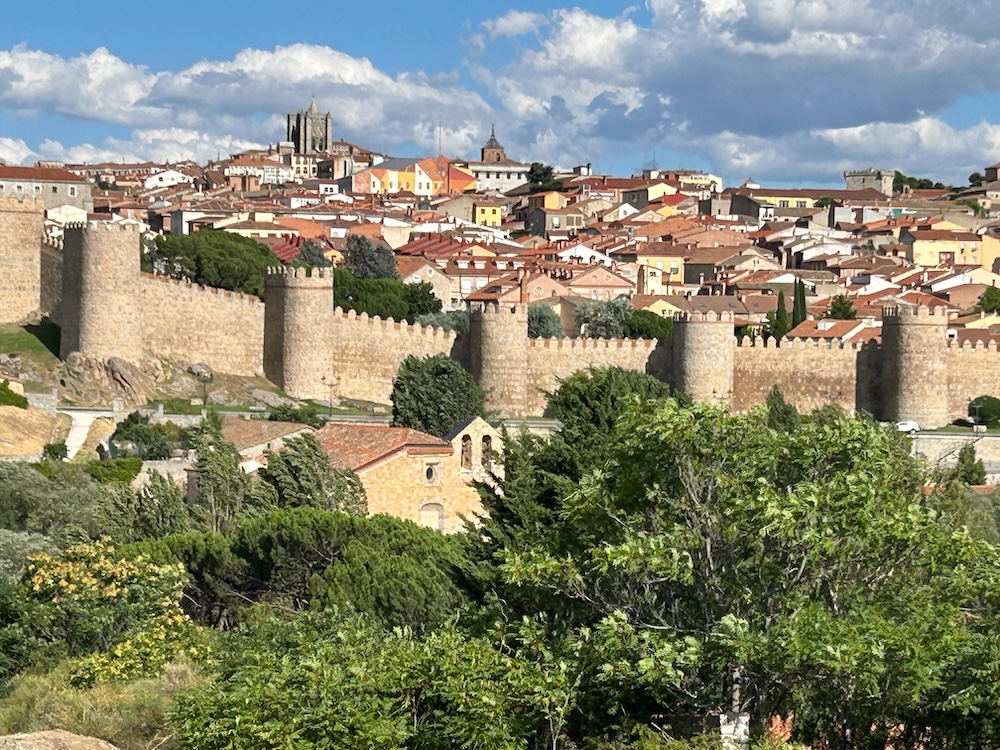
I’ve been to Spain, to Ávila, which is a walled city. I love walled cities. Walls seem to be everywhere in my imagination, and the walls of Ávila figure in my book. Spain was a very powerful experience for me, and I am glad my connection to Teresa helped me to make peace with the Spanish part of me. This is really important because, there is a lot of anger in me about colonialism. My great uncle always said to me, “Our family came here from Spain in the 1600s—you’re not that far from Spain.” So many people were killed when Spain invaded the Americas. But I can’t deny it’s part of who I am, and there are things to be proud of. Teresa is part of that.
ALTERS
I am inspired by Teresa’s insistence on figuring out why she exists, what she’s doing to make her world, and to repair the lives around her. Certainly she did this as a religious reformer and writer.
But she also did this also, directly for people she knew, as is captured in her letters. I have been captivated by Teresa’s letters, long, long letters she would write by hand. There are so many, and she wrote to so many different people. She was writing to the king, Felipe II, she was writing to the pope, she was communicating with emissaries to the pope—all men. Often, she wrote letters to ask for favors or to raise money to keep projects funded—including the projects of family members. The letters show her powerful role in her community. They show how free she felt to ask people for what she wanted. She had an understanding of what she needed to do to survive, and she did just that.
Teresa was a woman who could assess situations, keep her convents afloat, and keep out of politics. I find her a role model. She’s not an historical artifact. She’s operating the way some contemporary women do now, and that fascinates me. She reminds me of my late stepsister, a nurse and former nun who ran a hospital system with care, a strong sense of ethics and, always, deep concern for the people who worked for her. She was a spiritual descendant of Teresa, I’m sure.
DELIBOVI
Is part of what keeps Teresa from being consigned to history the influence of her work on women in the arts today?
ALTERS
Yes. Many contemporary women writers have been influenced by Teresa. There is Barbara Mujica, whose book, Teresa de Ávila, Lettered Woman, helped me a great deal. It gave me access to Teresa that I didn’t have before. Mujica has also written a novel, Sister Teresa, with Teresa as a character. There are many women whose writing in one way or another bears the influence of Teresa. At the end of We Need No Wings, Ann presents an author conversation section where she mentions books that influenced ger work, and she mentions Cathleen Medwick, who wrote the biography, Teresa of Ávila: Progress of a Soul.
The Spanish musician Rosalía has songs on the album Lux that, in one way or another, are connected to Teresa of Ávila—I know that the song Reliquía took its inspiration from the way Teresa’s body was broken up for relics, and that Sauvignon Blanc is interpreted as renouncing material possessions in the way of Teresa’s order. Rosalía sings in multiple languages, so she is forging connections—and spreading Teresa’s influence—across cultures. She keeps Teresa alive in her music.
DÁVILA CARDINAL
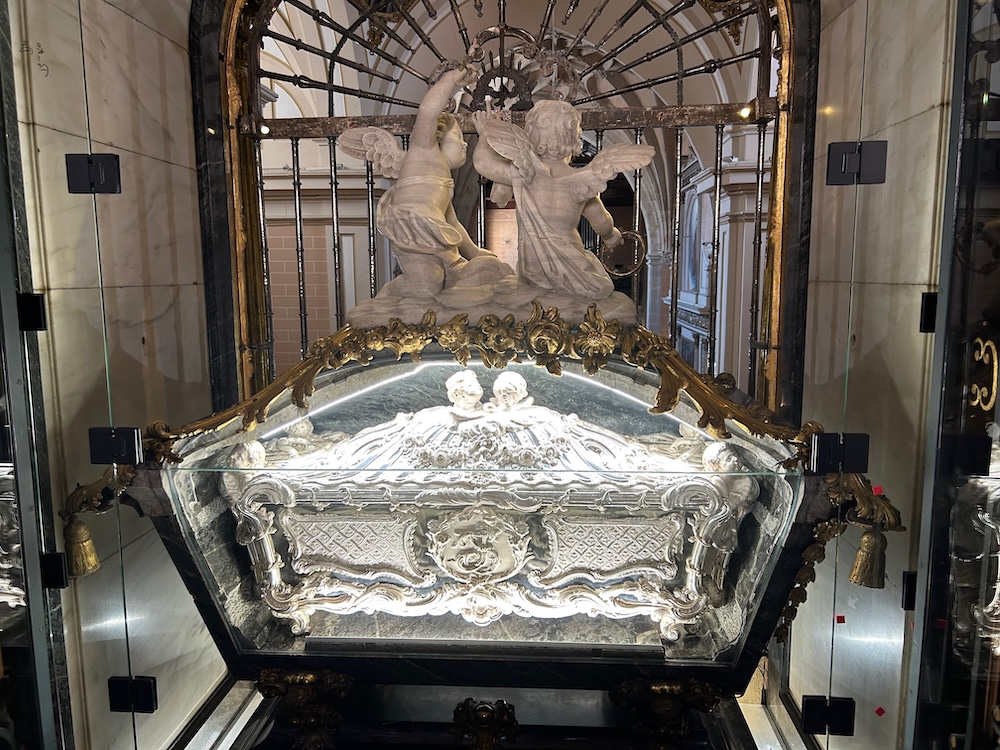
I have to add that I hate that the Catholic Church cut off parts of her body for relics and keeps digging her up like they did two years ago. I hate it so much, I had to express it in We Need No Wings. Let this soul rest in peace!
DELIBOVI
What is it about Teresa’s voice that calls to us from such a long time ago? What is it about her that still reaches us today—as writers, as women?
DÁVILA CARDINAL
In the practical terms, Teresa of Ávila is foundational to the literature of the entire country of Spain. That is surely one reason why we still turn to her.
I honestly think a lot of people enter their appreciation of Teresa through their fascination with her mystical experience of levitation. Then they find there’s so much more to her—more to who she was, more to the literature she created. She was incredibly powerful. People sense that. We all sense that Teresa was a rare human being—a unicorn in her time.
At a deep level, what moves us is Teresa’s fearlessness. She was absolutely unafraid. The Inquisition was always on her. But she wasn’t fearing for her own safety—I never got that from her work. She wanted to stay alive to help other people, not to save herself.
ALTERS
I think another reason Teresa still speaks to us is that she was a multi-genre writer. She wrote memoir, educational texts, poetry, theology, and more. This extends her appeal to writers of all kinds, whether they limit their genres or write across genres.
DÁVILA CARDINAL
Yeah, she’s a genre buster! Just when people try to pinpoint what she is, she switches it up. Another other thing is that Teresa had fabulous sense of humor. You get that in a lot of her writing, but particularly in the letters. You could just tell she was a dynamic person. People just gravitate towards her.
ALTERS
I wonder where she got that remarkable personality? Where did that come from? Probably partly from her privileged childhood and her ability to read and write as a child and talk with her family. Her family had a complex legacy. They had been Jewish, and were subjected to Spain’s decree that they should convert to Christianity or be forced into exile [the Alhambra Decree of 1492]. It was a terrible oppression.
Many things shaped Teresa to be the person she was. She came from a family adept at business, skills she used in founding convents and reforming her Carmelite order. She experienced raptures and visions. She was toughened by opposition. I have drawn a mental image of Teresa from her work, and this image is complex—an assertive, focused woman deeply interested in the spiritual well-being of others, but also as someone with a sense of playfulness and humor.
DÁVILA CARDINAL
We also can’t forget that everything Teresa did and wrote was in service. Service shaped her, and I think we have lost sight of that. There was a film made a few years ago, Cabrini, about another nun who became a saint, Mother Francesca Cabrini. She is similar to Teresa in having a strong character. Like Teresa, she was very ill but lived a long time. Cabrini’s life was all about service. It was not about thinking of yourself. We are drawn to people like Mother Cabrini and Santa Teresa because of this: the willingness to put yourself out there, for reasons bigger than yourself.
I would like to think, as a writer, I am of some service. But I am extremely flawed. I could never say how much I give to the community with my work. I try to just tell an honest story, because storytelling has been at the root of community forever. Service matters. Look at Bad Bunny—he has done so much for so many communities. He is bringing that service element back into the arts. It’s what having a platform is for. It’s what Teresa did.

Additional photo credits: Dana Delibovi; Kunsthistorisches Museum, Vienna.
Icon: Vector Stall
* * *